Material - Linoleum and Other Composite Floors
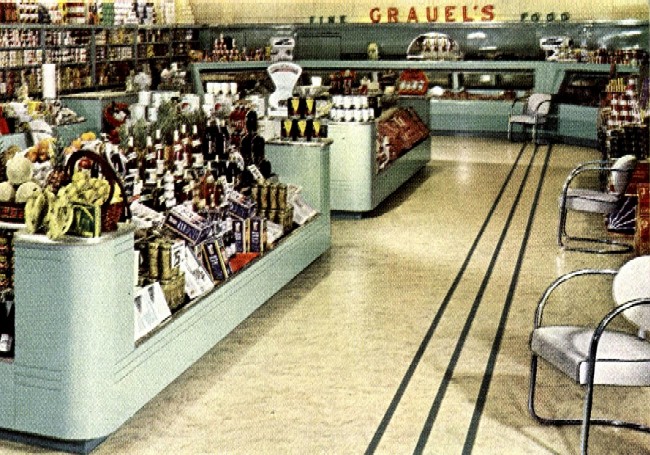
Custom-Craft Floor with Speed Lines, Graull's Fine Foods, Plain and Marbelle Linoleum, 1939.
Armstrong's Floors and Wall Coverings, p. 4
Linoleum and similar composition floors were a popular flooring choice in homes in Europe and America during the 1920s and 30s. Like many of the materials widely adopted in the progressive interwar period, it had its roots in the late Victorian period.
Linoleum was created by Englishman Frederick Walton in 1855 when he forgot to seal a container of linseed oil he’d been using as paint thinner before leaving for the day. A solidified oil skin formed leading him to experiment with ways to use it for waterproofing fabrics creating a varnish he called linoxyn which he patented in 1860. This didn’t sell well but Walton got the idea to use the tough, elastic product to create floorings from travelling salesmen. By combining linseed oil, chalk, cork dust and resin and applying the mixture to jute fabric, he created a flooring which he eventually named Linoleum, derived from the Latin words linum (flax) and oleum (oil).
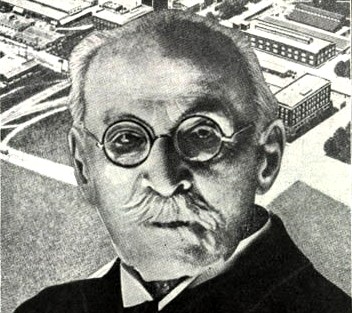
Frederick Walton, 1940
He patented this in 1863, with the idea that the more durable material would replace the oilcloth then being used for flooring. In the patent Walton noted that the product could be “printed, embossed, or otherwise ornamented.” He began production of linoleum the next year in Staines, England in 1864
The fledgling company lost money for five years due to competition with existing products. An aggressive advertising campaign rescued the product which was easier to clean and less expensive than competitive products. Walton continued to improve and market the idea. He exported linoleum to Europe and America in 1869, opening the American Linoleum Manufacturing Company on Staten Island. In 1882, he created ‘inlaid linoleum’ with the coloring saturating the product instead of lying only on the surface, making linoleum designs longer lasting. Through experience, he was able to make printed linoleum sheets in a week which had once taken several weeks. In 1898, he found a way to make straight lines in his linoleum products, allowing for sharp, geometric designs.
Walton’s success bred competition. New competing linoleum products appeared in the early 1870s using the name linoleum because Walton hadn’t trademarked it. Some other inventors created similar processes allowing for faster and cheaper production, although some of them were of poorer quality than Walton’s linoleum. Others created better products and endured. Sir Michael Nairn opened the American Nairn Linoleum Company shortly Walton’s American debut. He eventually became a leading producer. While looking for new cork-based products, the biggest supplier of cork in the world Thomas Armstrong began making linoleum in the early 1900s. By the 1920s, several other composite floors manufacturers had entered the market including Sloane, Blabon, Pabco, and Dominion (Canada).
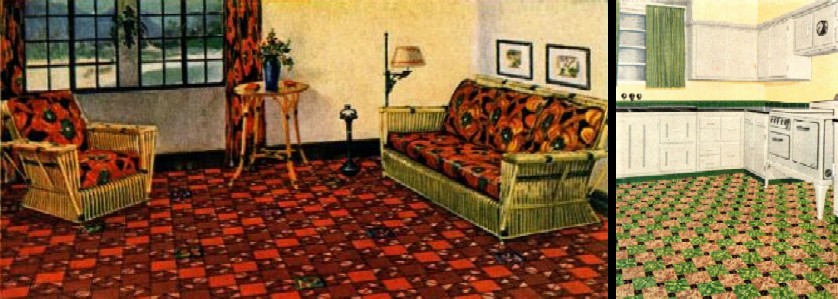 Linoleum Room Designs by Congoleum-Nairn - Nairn Gold Seal Inlaid, Hudson Pattern No. 1, Congoleum-Nairn pattern book 1928, p. 44; Modern Kitchen, No. 2 Quality Printed Body Cloth, Pattern No. 23-198, Nairn's Australian made linoleum 1938-1939, p. 100
Another Pennsylvania-based linoleum producer grew out of the partnership of United Roofing and Barret Manufacturing in Erie. Barret had been making roofing material called Congoleum for United which they also had been using as floor runners to eliminate noise and reduce dust collection. They acquired Nairn’s Linoleum production arm in 1924 leading to the production of both Congoleum composite (felt-based) flooring and Nairn linoleum. Although Felt-backed composite flooring didn’t last as long as burlap (jute) backed linoleum, but it was three times cheaper.
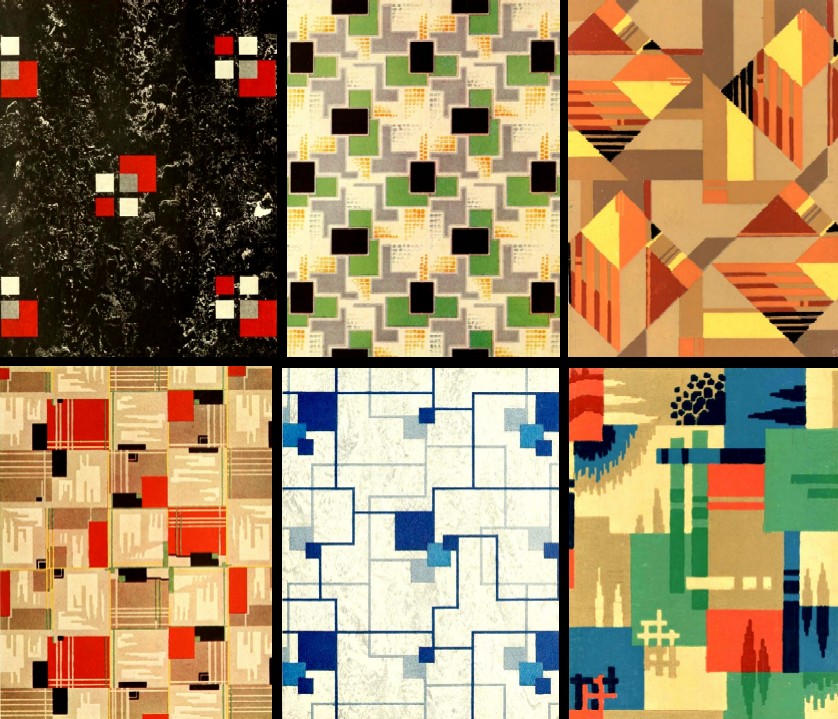 Congoleum-Nairn Floor Patterns: <Top> Sealex Karnean, Modena No. 3271, 1939, Resilent Floors of Nairn Linoleum for Architects, p. 64; Gold Seal Pattern No. 868, Roster, 50th Anniversary Congoleum-Nairn patterns 1936, p. 202; No. 2 Quality Printed Body Cloth, Pattern No. 22-152, Nairn's Australian made linoleum 1938-1939, p. 53;
<Bottom> Gold Seal Pattern No. 880, Rabo, 50th Anniversary Congoleum-Nairn patterns 1936, p. 207; Linoleum, Sealex Karnean, Brewster No. 7509, 1939, Resilent Floors of Nairn Linoleum for Architects, p. 64; No. 2 Quality Printed Body Cloth, Pattern No. 24-143, Nairn's Australian made linoleum 1938-1939, p. 46
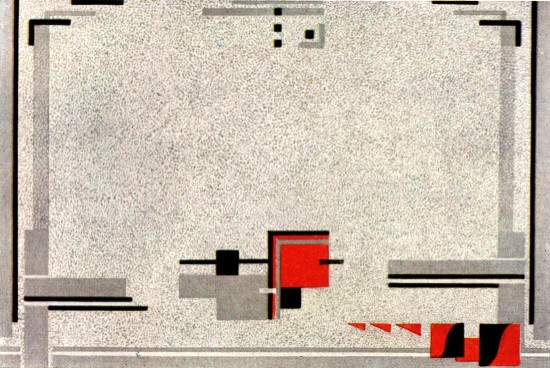
Rug Pattern Sample (Not Full Rug) Sarrana Rugs, Felt Base, Pattern 4021, 1939,
Carthage standard specification floor covering
Linoleum was not limited to wall-to-wall floor coverings. Linoleum ‘rugs’ appeared in the 1870s. As it became possible to print more and better patterns, they often contained intricate designs, mosaics and floral patterns like those found in real rugs. Being less expensive, Congoleum ‘rugs’ became popular, particularly after they installed a rotary press which allowed for machine-printed patterns in 1913. Armstrong introduced linoleum rugs in 1917 which sold very well. Following the purchase of composite, felt-backed maker Waltona Company in 1925, they began selling felt-backed rugs. “In general, by the late 1920s, most resilient flooring rugs were felt-based instead of linoleum. Felt-base rugs (and flooring) continued to be produced well into the 1950s.” (Jane Powell, "History of Linoleum Rugs", Twin Cities Bungalow Club website, gathered 2-1-26) By the end of the 1920s, most of the composite flooring products sold were felt-backed rather than jute.
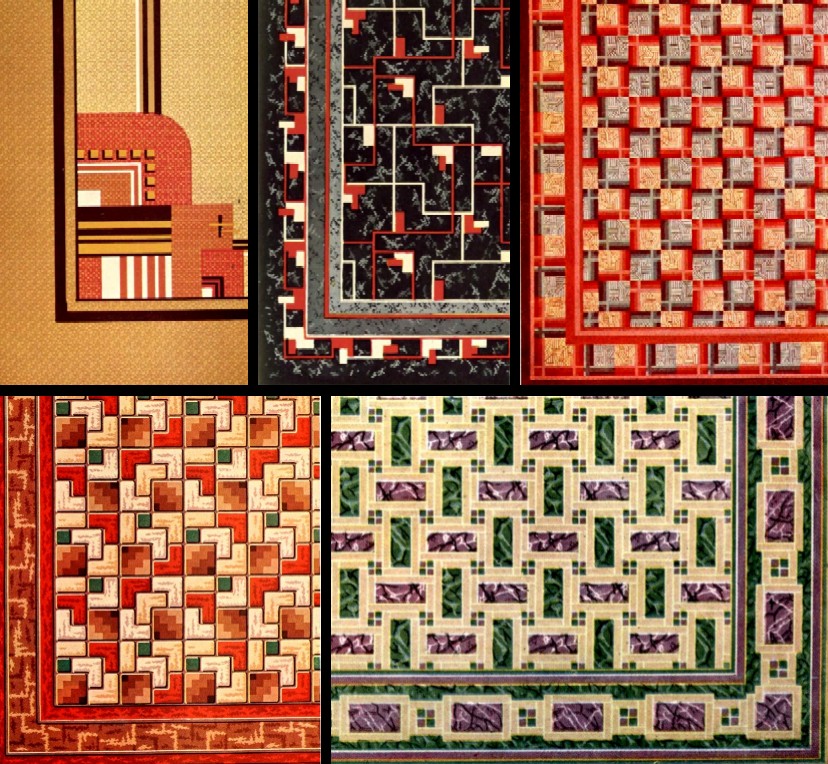 Linoleum Rug Corner Samples (Not Full Rugs) <Top> Standard Rug, No. 4390, 1939, Armstrong's Quaker and Standard Rugs and Floor Coverings, p. 49; Standard Rug, No. 4247, 1939, Armstrong's Floors and Wall Coverings, p. 46; Guaranty Rug No. 9461, Code Yowoo, 1935, The Pabco pattern boo- felt base floor coverings, p. 8
<Bottom> Cresent Felt Base Rug, Pattern No. 0166, Krypville, 50th Anniversary Congoleum-Nairn patterns 1936, p. 225; Aristocrat Felt-Base Rugs, Kreme, No. 9121, 1931, W and J Sloane lineoleum, felt-base p. 147
Another
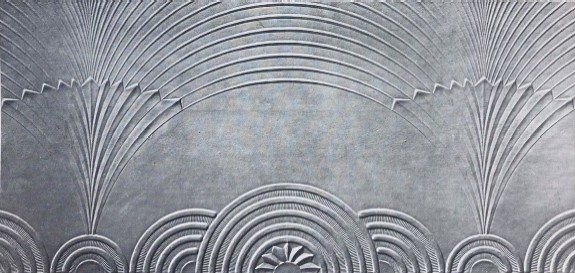
Art Deco Lincrusta Textured Wall Covering, Pinterest
interesting use of lineoleum was as wall covering. Just as he had discovered the original material, Walton also began exploring its use as a wall covering in 1877 with the created of Lincrusta. Similar to linoleum, lincrusta was made from solidified linseed oil mixture containing fillers, pigments, and which was resins pressed onto a paper backing. The resulting paste allowed the the durable material to be embossed so that it could imitate carved wood, leather and plaster while maintaining the durable, easy-to-clean properties of linoleum. When Wall Paper Manufacturers (WPM) bought Frederic Walton's company in 1905, they continued making Lincrusta until 1939. Although not as popular as it was in Victorian times, WPM updated it over time even producing some Art Deco styles. Armstrong Cork Company began producing their own (smooth) linoleum wall product called Linowall in the 1930s, producing it well into the 1950s.
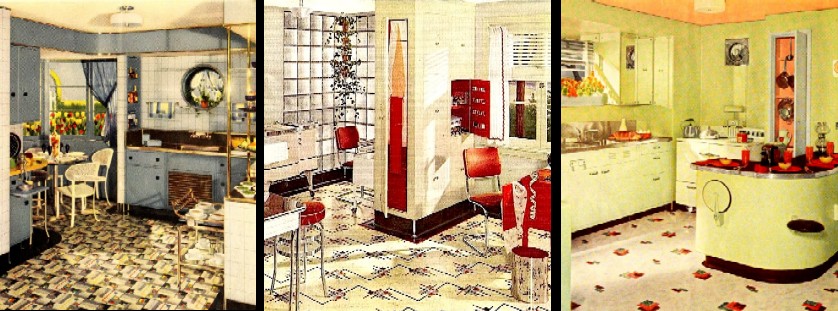 Rooms Designs with Armsrtong Linowall and Linoleum, From Dream Kitchens for 1939: Blue Kitchen with Chrome, Blue Linowall No. 751, Embossed Linoleum Pattern 5531, p. 3; Streamline Moderne Laundry and Sewing Room, Linowall No 732, Floor Pattern 0377, Glass Block Wall, Chrome Furniture, p. 12; Streamline Moderne Kitchen, Linowall 738, Floor Straight Line Inlaid Pattern 0297, p. 14
Linoleum
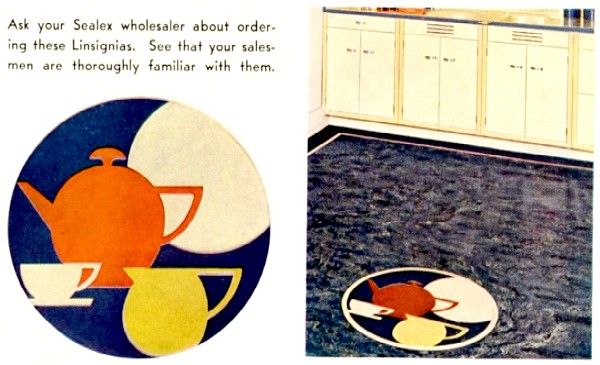
Tea Service Linoset/Linsignia, 50th Anniversary Congoleum-Nairn patterns 1936, p. 131
designs were not limited to what could be printed on them. Standalone designs could be inserted into linoleum and other composite floors by cutting part of the flooring out and replacing it with a printed design. Armstrong explained how this could be accomplished in a book created for linoleum installers as early as 1924. A later edition of this book explained that “customers are demanding floors in which the linoleum is laid in individualized effects or with inset figures.” (Armstrong Cork Company, Armstrong’s Handbook for Linoleum Mechanics, 1939, p. 109). Armstrong produced ‘Ready-Cut Linosets’ which could be easily placed in a floor using a pre-made die and the pattern which matched the die. Other companies produced similar designs and dies. (See the 'Lignsignia' by Congoleum-Narn at right.) Another way to create patterns was called by Armstrong ‘Custom-Craft Floors’. Here, multiple pieces of different colors of linoleum were laid next to one another or in cutout shapes to create interesting effects such as is seen below.
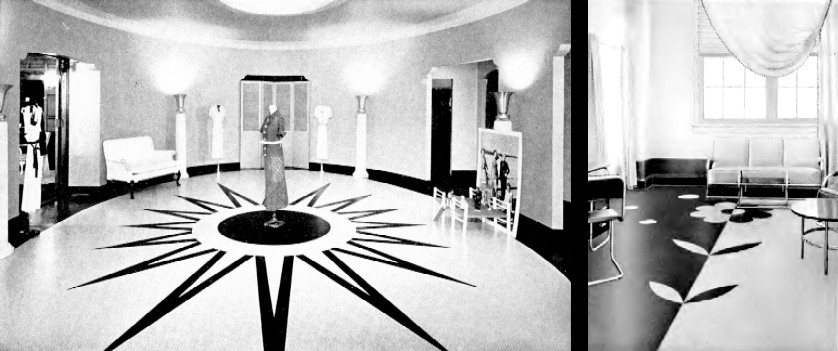 Custom-Craft Linoleum Floor Designs: Custom Craft Floor, Davis Dress Shop, Pittsburgh, PA, 50th Anniversary Congoleum-Nairn patterns 1936, p. 140; Custom-Craft Floor with Flower Pattern, 1939, Armstrong Handbook for Linoleum Mechanics, p. 113
C
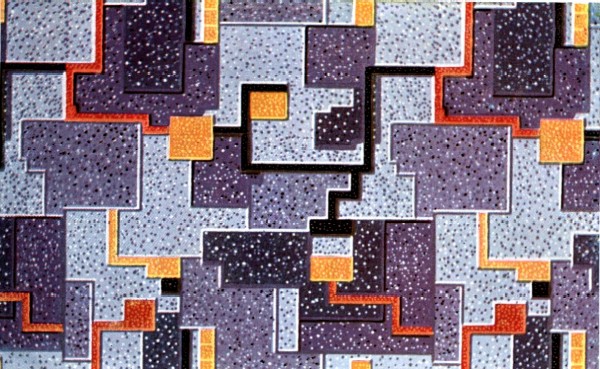
Sarrana Yard Goods, Felt Base, Pattern 1363, 1939, Carthage standard specification floor covering
omposite flooring remained popular throughout the Interwar period becoming quite popular as flooring in the 1920s. A December, 1927 builder’s magazine noted that linoleum was now being used in every room of “the most expensive homes down to the modest cottage”. ("Linoleum", Building Age and national Builder, Volume 49, 1927, p. 122) House Beautiful magazine explained in 1926, composite flooring was just as durable as marble flooring while also being ‘quieter to walk on.’ They continued, “a good linoleum floor, properly laid, is probably about the same as a good hardwood floor; its possible advantages lie in a wide variety of color and design, easy maintenance and a pleasant tread.” (“Floors and Floor-Coverings”, The House Beautiful Furnishing Annual, 1926, p. 42)
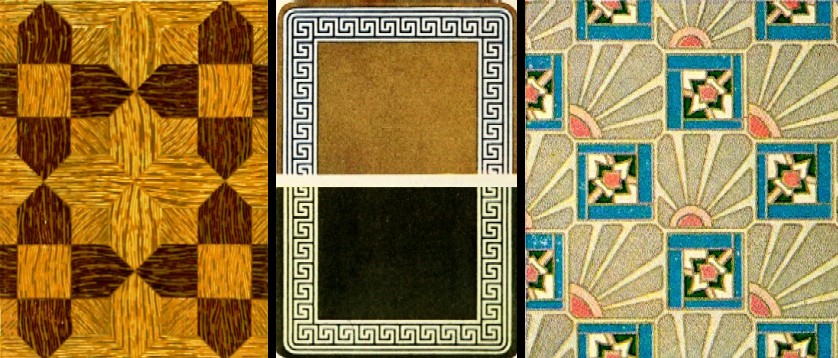 Art Deco Patterns in Linoleum: (Straw Marquetry) No. 2 Quality Printed Body Cloth, Pattern No. 21-161, Nairn's Australian made linoleum 1938-1939, p. 56; (Greek Key) Cork Mat in Brown or Green, 1931, Blabon-Sandura Floor Coverings - Styles for 1931, p. 42; (Sunburst) Accolac Printed No. 8555, Armstrong Cork Company 1930 Pattern Book, p. 56
The variety of colors and styles were important to the popularity of composite floors. “Over three hundred designs and colors have been created by one large manufacturer alone for the modern home [probably Armstrong] – not arbitrarily, but with rooms of certain types in view.” ("Linoleum", Building Age…, p. 122) Among the patterns available were floral, tile, parquet floor and marble designs. Linoleum ‘rug’ designs imitated fabric rugs styles with oriental, braided, rag and needlepoint styles. Some even printed fringe on the edges. The Moderne style was not forgotten. “During the 1930s and ‘40s, there were even a couple of full-on Art Deco/Moderne/Streamline rug patterns, though not as many as one might have liked to see.” (Powell) This was likely true in America because the adoption of what we call Art Deco was rather slow outside of New York and a few other disparate locations. Popular patterns in Europe and Australia during this period included bold geometry, checkers, marbling and mosaic patterns with bright Art Deco colors in some of them.
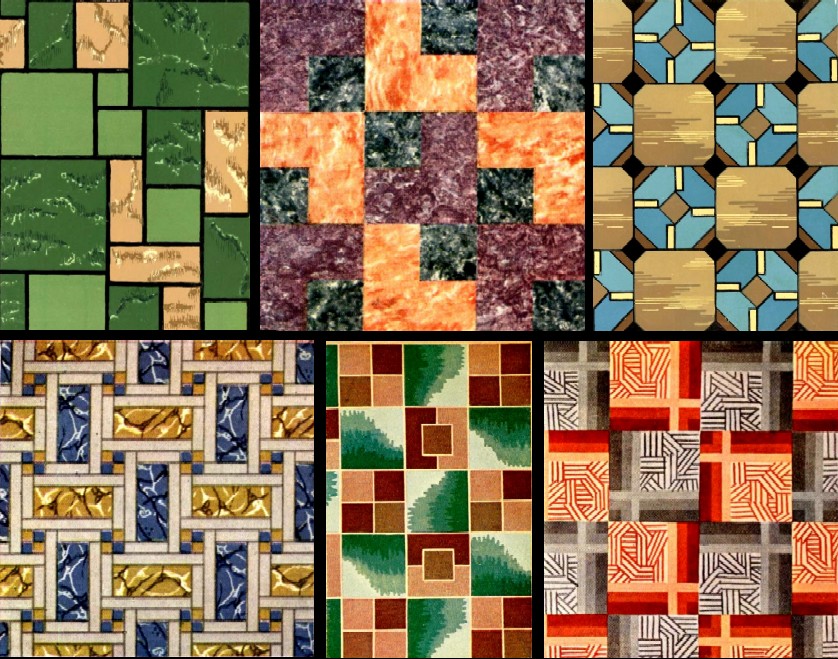 Linoleum in Jewel Colors: <Top> No. 2 Quality Printed Body Cloth, Pattern No. 22-136, Nairn's Australian made linoleum 1938-1939, p. 42; Pompeiian Marble Tile Inlaid, Pomelo No. 407, 1931, W and J Sloane lineoleum, felt-base p. 31; No. 2 Quality Printed Body Cloth, Pattern No. 22-168, Nairn's Australian made linoleum 1938-1939, p. 57
<Bottom> Felt-Base Yard Goods, Heroic, No. 7012, 1931, W and J Sloane lineoleum, felt-base p. 107; Challeng Yard Goods, No. 5456, Code U{UWY, 1935, The Pabco pattern boo- felt base floor coverings, p. 20; Pattern No. 3462, Code YRBOA, 1935, The Pabco pattern boo- felt base floor coverings, p. 17
Although linoleum fell out of favor in the 1950s with the rise of cheaper, synthetic vinyl flooring. The product’s durability worked against it as decorating styles changed. Designs from the first half of the century were viewed as ‘out-of-date’, resulting in people wanting something new. Vinyl flooring was cheaper and easier to both install and maintain. By the 1990s, linoleum flooring had all but disappeared. Yet the durability, longevity, and an all-natural composition have attracted renewed interest in its sustainability and design charm.

Breakfast Nook, Linoset and Custom-Craft Design, Monobelle No. 042,
Glass Block Wall, , Armstrong, Dream Kitchens for 1939, p. 8
Sources Not Mentioned Above:
"Linoleum", Wikipedia, gathered 2-2-26
Mr. Victorian, "Linoleum - The Victorian Wonder Product!", gathered 2-1-26
"The Evolution of Linoleum", Hagley Museum, gathered 2-1-26
Helena Samson, "Lovely Linoleum and Other Historic Floor Coverings - 2 Hot Takes: Linum (“Flax”) and oleum (“oil”) – Fashionable and Affordable", Lives and Legacies blog, gathered 2-1-26
“'The Most Perfect and Beautiful of All Wall Decorations'”, Driehaus Museum website, gathered 2-1-26
Elizabeth Broman, "Linoleum Lives On", Cooper Hewitt website, gathered 2-4-26
Kathleen Siddell, "Linoleum Is Making a Serious Resurgence, And History Says It’s For a Good Reason", Apartment Therapy website, gathered 2-5-26
"Do People Use Linoleum Flooring Anymore?", Carpetland website, gathered 2-5-26
"Linoleum", Building Age and national Builder, Volume 49, 1927, p. 122